
Autonomously inspect live-flow sewers for defects
Autonomous live-flow sewer inspection, defect detection, and condition monitoring

The Gap
Sewer networks face aging infrastructure, limited access, and incomplete visibility. Many areas are inaccessible or have not been inspected for years, while CCTV data is often inconsistent, unstructured, or unsuitable for AI-based analysis. Limited historical records and single sensing sources also make it difficult to track deterioration, detect defects, and understand network risks.
Apollo Sewer supports the full inspection workflow, from autonomous data capture to digital asset reporting. It accesses hard-to-inspect locations, collects structured inspection data, and builds reliable datasets for digitalization and digital twin development. With minimal service disruption and multiple sensors, Apollo Sewer improves defect detection, historical tracking, and maintenance planning.
Autonomous amphibious inspection with LiDAR and AI for precise monitoring in no-signal environments

Tracks infrastructure changes over time to identify areas requiring maintenance attention before failures occur

Combines computer vision, object detection, and LLMs for deeper, layered analysis of sewer pipe conditions

Integrates LiDAR, cameras, thermal imaging, and geophone inputs for comprehensive sewer condition assessment

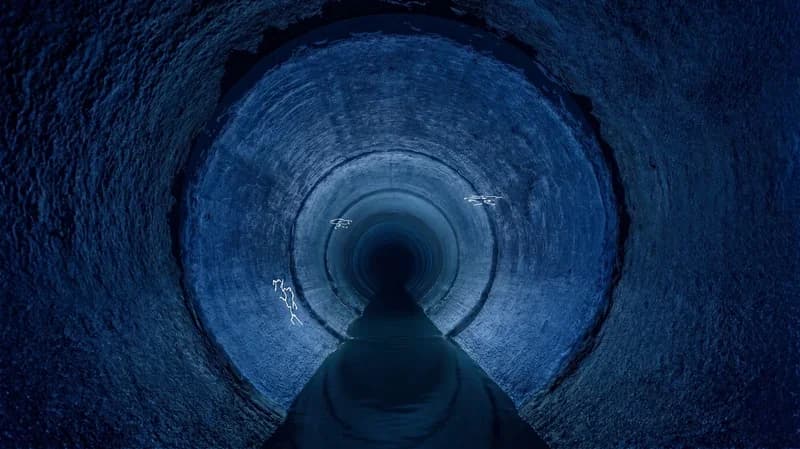
Continuous inspection using amphibious robots equipped with LiDAR, optical, and infrared sensors
Creates structured outputs for digital twin development, asset monitoring, and scenario analysis

Uses efficient inspection workflows to decrease traffic blockage, reduce downtime and limit impact on operations
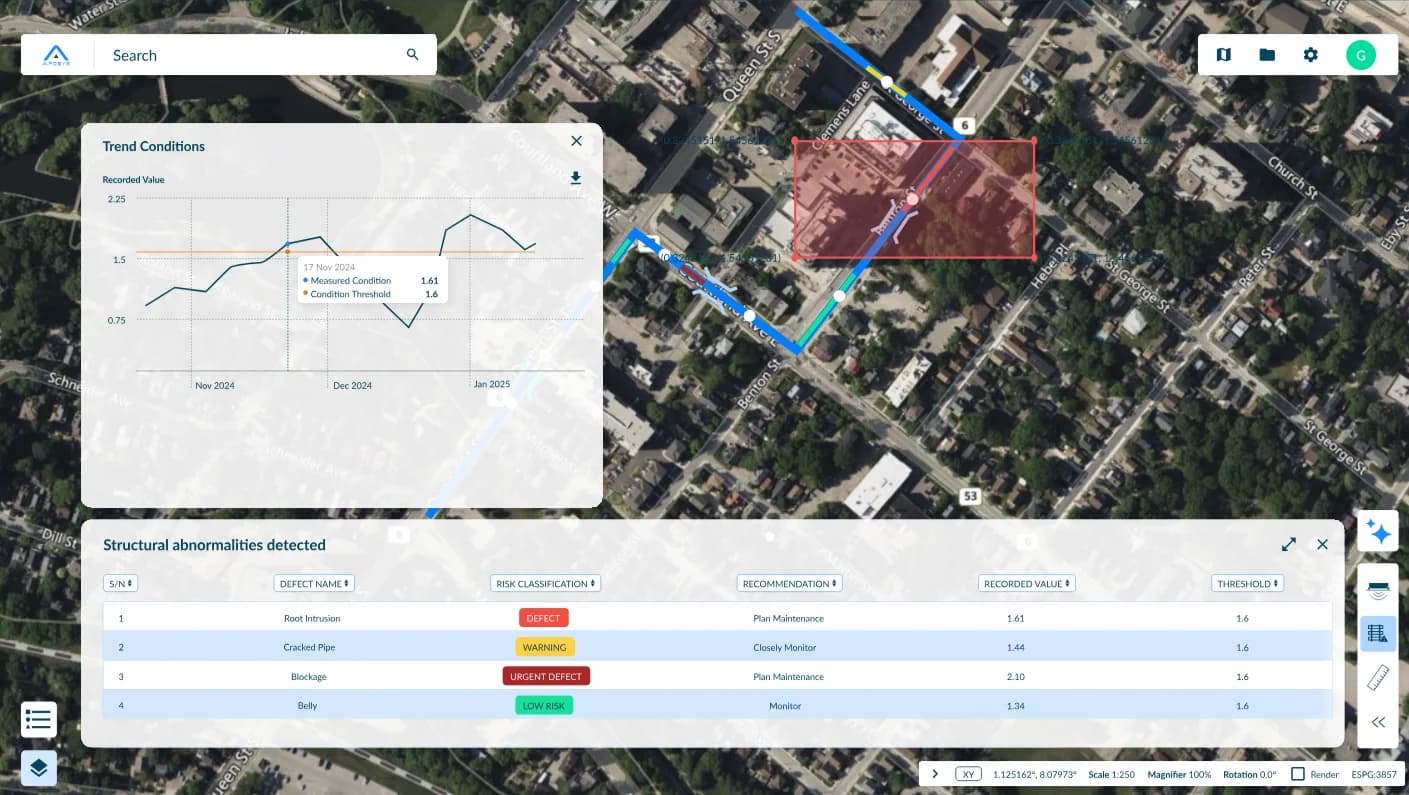
Review network conditions, structural anomalies, and inspection history in one geospatial workspace for faster maintenance prioritization.
How it works
Deploy amphibious robotic system to navigate sewer pipelines under live flow conditions.
Capture multi-sensor data using LiDAR, optical, and infrared sensors for full internal assessment.
Process and analyze data through AI to detect defects such as cracks, blockages, and corrosion.
Visualize insights on the dashboard with geo-referenced outputs to support maintenance decisions.
Autonomously inspect live-flow sewers for defects

Our AI converts raw data into predictive trends and insights
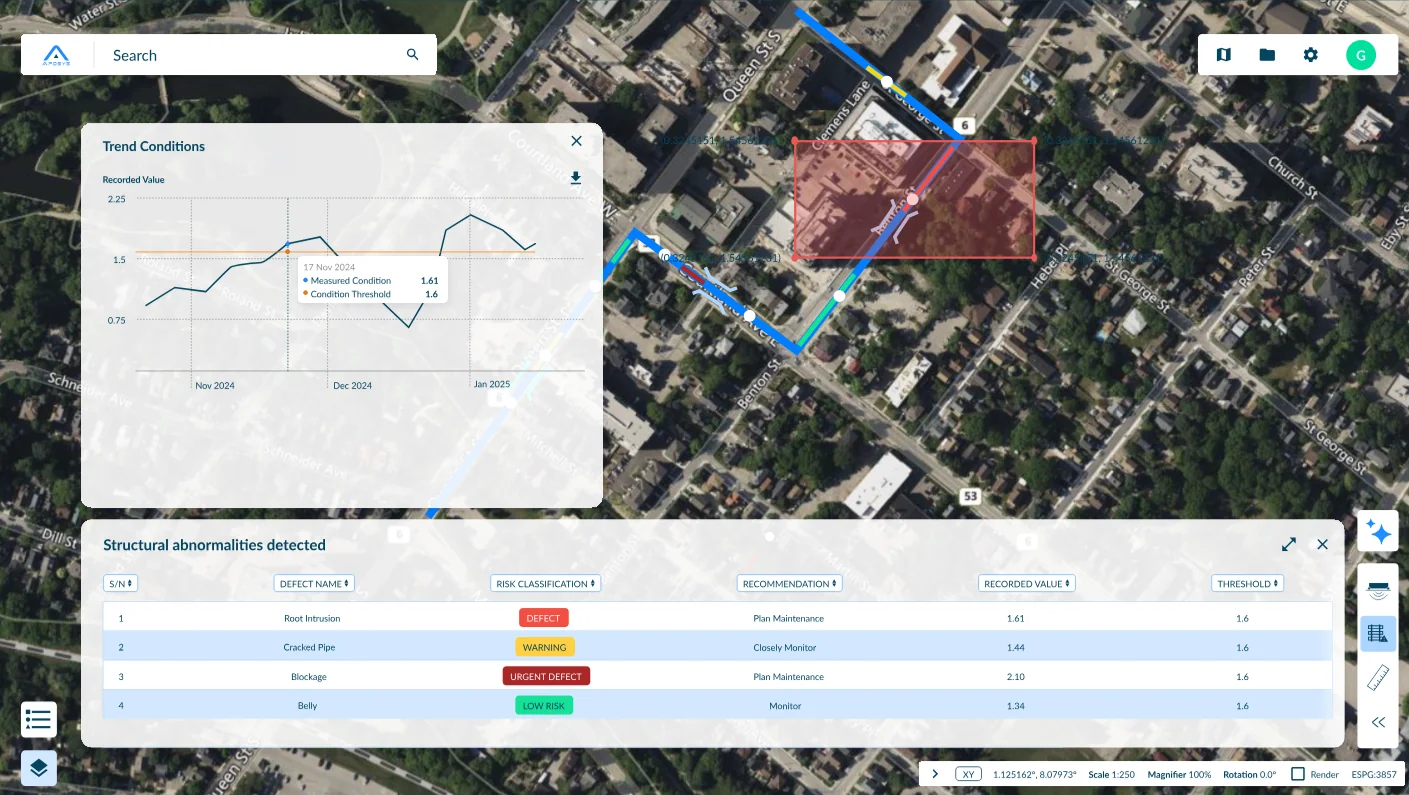
Visualize data insights and plan maintenance work

Seamless API export to CMMS and GIS systems

Cracks
Blockages
Corrosion
Infiltration
Fractures
…and more
Designed for high-flow, submerged, and confined sewer environments
Reduces reliance on manual inspections in hazardous confined spaces
Low-maintenance system for scalable, network-wide monitoring
Talk to the ApoSys team about deploying Apollo Sewer for autonomous live-flow inspection, AI-assisted defect detection, and maintenance-ready reporting.
